Around the venue
Phnom Penh riverfront before the show
The Tonlé Sap quay, the Royal Palace, the Silver Pagoda and Wat Phnom: what to know about the places around a riverside dance evening in Phnom Penh.
Book an Apsara evening ↗Quick answer
The Apsara show is on Preah Sisowath Quay, the three-kilometre riverfront strip beside the Tonlé Sap, within walking distance of the Royal Palace. The palace, the Silver Pagoda and Wat Phnom are the sights to put around it. See them earlier in the day and come to the quay for the evening.
The quay
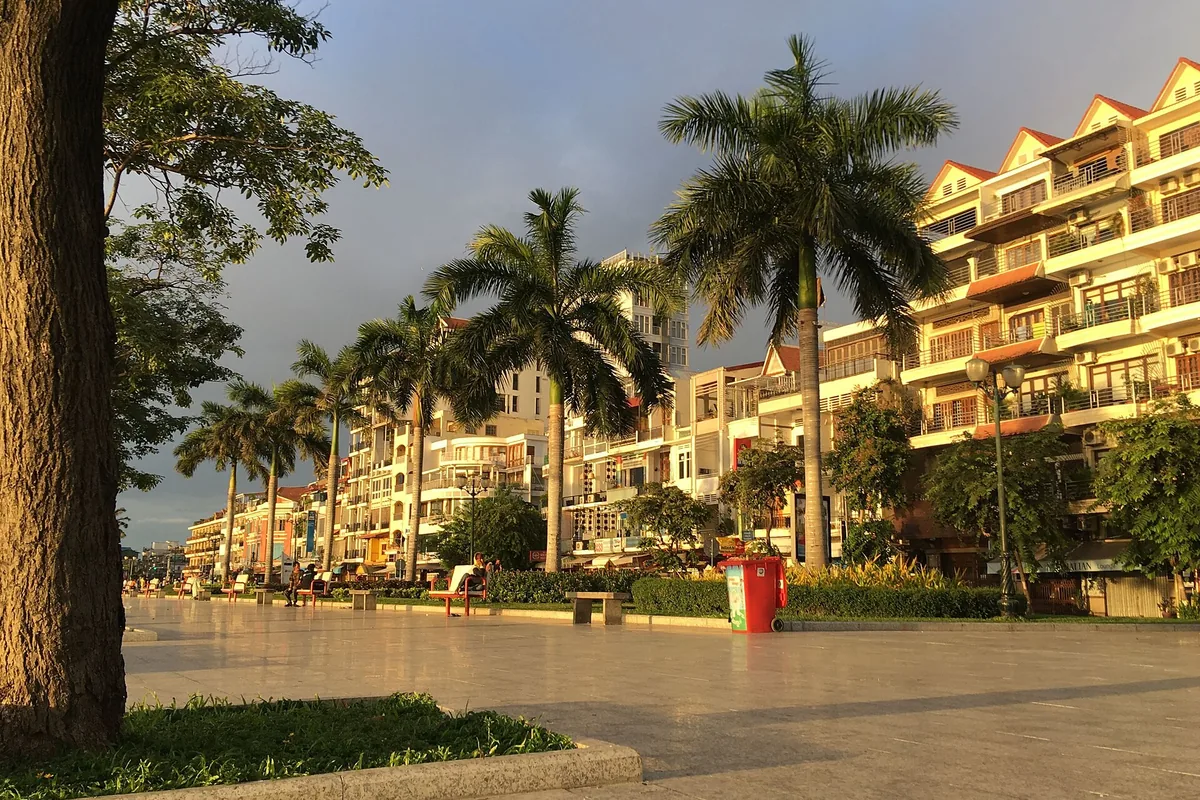
Preah Sisowath Quay is a three-kilometre riverfront strip along the Tonlé Sap River. It is lined with hotels, restaurants, bars, cafés and shops, and it is filled with vendors and locals and popular with tourists. The portion in front of the palace was used for watching boat races during the Water Festival. The quay is named in honour of King Sisowath of Cambodia. The ticket places the show on the first floor of number 313 on this quay. The Foreign Correspondents' Club of Cambodia is on the strip.
Where the rivers meet
Phnom Penh sits at the confluence of the Tonlé Sap and Mekong rivers, and it is the start of the Bassac River. Its former name, Krong Chaktomuk, is short for a longer name and means city of four faces. The Royal Palace stands on the western bank of the confluence called Chaktomuk, a name that alludes to Brahma. When you look out over the water from the quay, you are looking at the point that gave the city its old name. The city is the seat of Cambodia's monarchy, based at the Royal Palace.
The Royal Palace
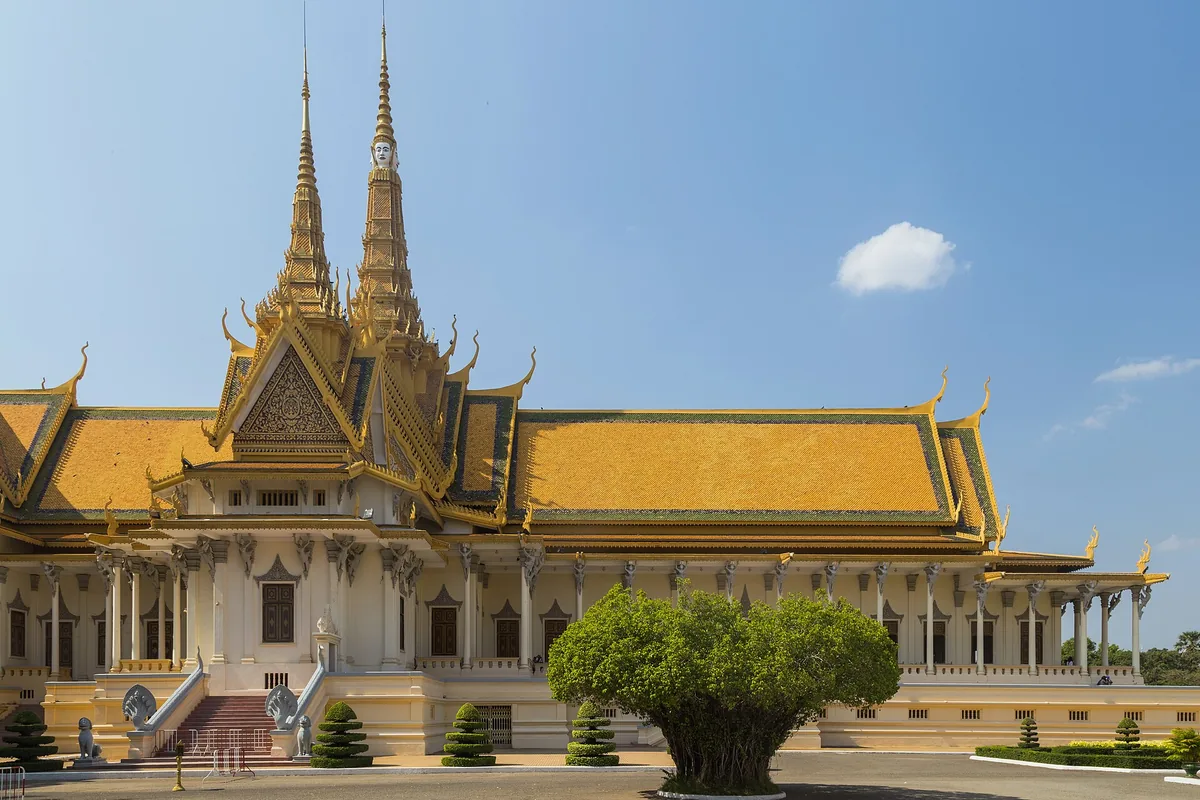
The Royal Palace serves as the royal residence of the King of Cambodia. King Norodom built it in the 1860s, and it was largely demolished and rebuilt in the early twentieth century. The Throne Hall is the place where kings are crowned and foreign ambassadors are received. In the palace's eastern courtyard, the Chan Chhaya, or Moonlight Pavilion, is used for state banquets and dance performances, so the palace and the dance have long shared this stretch of the river. Cambodian monarchs have occupied it since it was built, with a period of absence when the country was in turmoil during and after the rule of the Khmer Rouge.
The Silver Pagoda
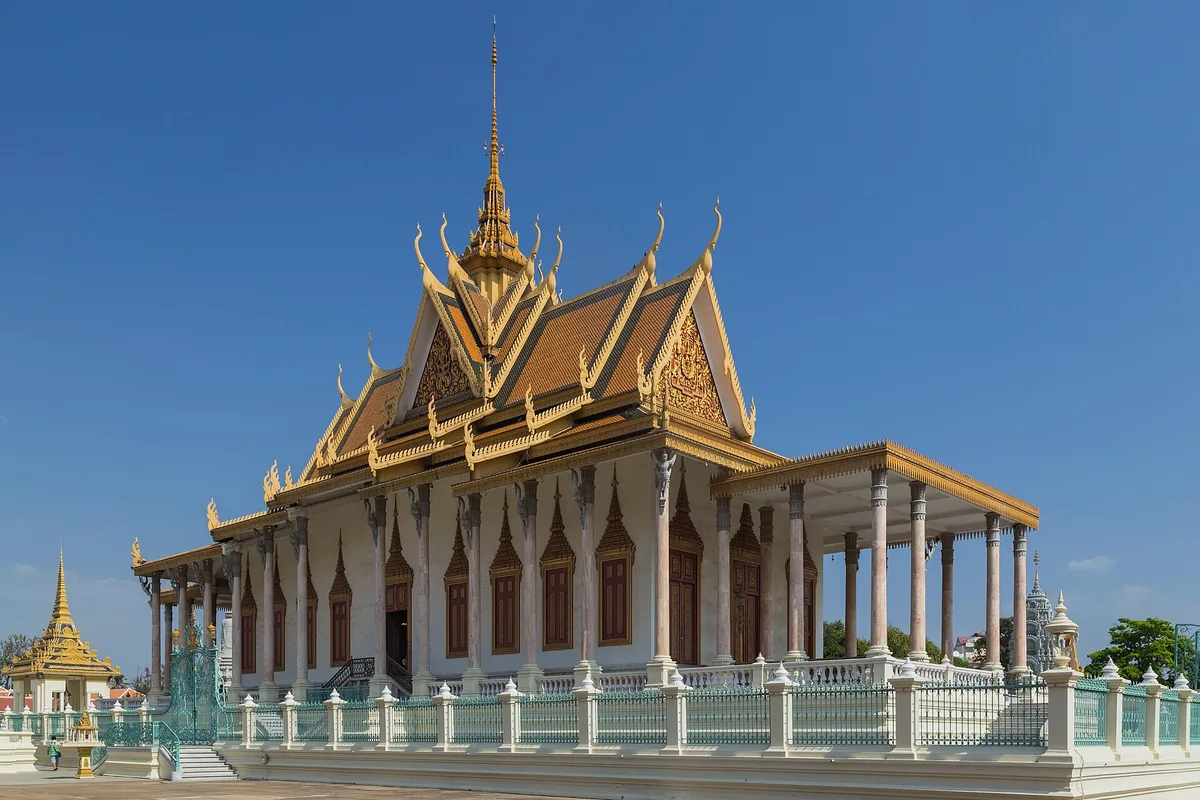
The Silver Pagoda stands within the Royal Palace complex. Its formal name is Wat Ubaosoth Ratanaram, and it is also known as Wat Preah Keo Morakot. It houses many national treasures, including a small green crystal Buddha. Foreign visitors call it the Silver Pagoda because its floor is covered with silver tiles, although only a small area of them is visible to the public. The wall around it is covered with murals of the Reamker, painted by Cambodian artists in the early twentieth century. A life-sized gold Maitreya Buddha commissioned by King Sisowath is among its treasures.
Wat Phnom
Wat Phnom, a Buddhist temple on a hill, gives the city its name: Phnom Penh means Penh's hill. According to legend, a wealthy woman named Penh found a floating tree with four Buddha statues and one of Vishnu inside it, and she raised a hill and a shrine to house them. The temple's stupa symbolises the name of the city. Wikipedia says the pagoda is named after Lady Penh, from the story of the five statues found in the tree.
Fitting it together
The palace and the pagoda are daytime sights, and the dance is an evening one, so give each its own part of the day. Check opening hours and entry rules on the palace's own pages, because they change. Because the quay is lined with restaurants, bars and cafés, an early dinner before the show is easy to arrange. Then walk down to the quay for the show, which is within walking distance of the palace according to the ticket. Wat Phnom sits at the north end of central Phnom Penh, so treat it as a separate stop.
Frequently asked questions
How long is Preah Sisowath Quay?
Wikipedia describes it as a three-kilometre riverfront strip along the Tonlé Sap River in Phnom Penh.
Why is it called the Silver Pagoda?
Because its floor is covered with silver tiles, although only a small area is visible to the public.
What is Chan Chhaya?
The Chan Chhaya, or Moonlight Pavilion, is a palace pavilion used for state banquets and dance performances.
Is the show near the Royal Palace?
The ticket says the restaurant is within walking distance of the Royal Palace.
What is Wat Phnom?
A Buddhist temple on a hill in Phnom Penh, from which the city takes its name.
Sources