The history
Royal Ballet of Cambodia: history
From temple dancers at Angkor to the royal palace, the 1950s Apsara dance, near loss under the Khmer Rouge and the revival that put it on UNESCO's list.
Book an Apsara evening ↗Quick answer
The Royal Ballet of Cambodia grew from temple and court dance, was nearly wiped out under the Khmer Rouge and was rebuilt after 1979. UNESCO has listed it since 2003. Its performers today work in schools, state events and the tourism sector.
Names and terms
Western names such as Cambodian court dance refer to the royal court, because attendants of the royal palaces performed and maintained the tradition. UNESCO and many scholars formally call it the Royal Ballet of Cambodia, a term that may also refer to the National Dance Company of Cambodia. In Khmer it is Robam Preah Reach Troap, meaning dances of royal wealth, and it is also called Lakhon Luong, the king's theatre. Wikipedia adds that laypeople often call its dancers apsara dancers, although the apsara is just one type of character. Both names appear in UNESCO's publications and in scholars' work, so you will meet either one when you read further.
From temple to palace
One of the earliest records of dance in Cambodia dates from the 7th century, when performances were used as a funeral rite for kings. Ancient stone inscriptions describe thousands of apsara dancers assigned to temples, performing divine rites as well as for the public. During the Angkor period, temple performers came to be considered apsaras, who served as entertainers and messengers to divinities. After the Angkor era ended, the tradition of temple dancers declined.
The palace years
Wikipedia records that Cambodia became a French protectorate in the 1860s, and from then on dancers began performing for foreign dignitaries and for the public on the monarch's birthday. A dance hall was built at the palace, and the troupe also performed at colonial expositions in France. Dance was thereby promoted as national identity, and it remained tied to royal ceremony for decades.
Queen Kossamak's reforms
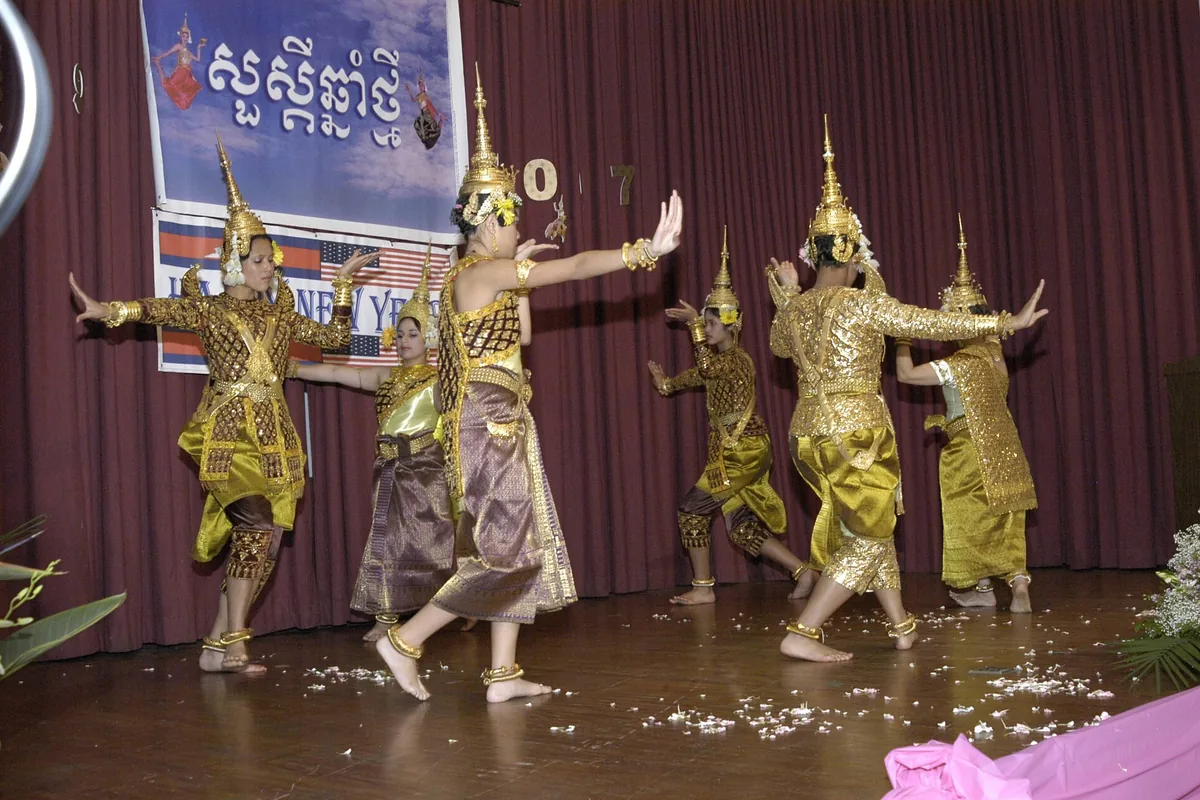
Queen Sisowath Kossamak became a patron of the Royal Ballet of Cambodia and made several reforms, including a two-hour performance set made up of opening and closing dances and a drama between them. Wikipedia adds that she introduced new dances, and that the Apsara dance of today was created under her guidance. After independence she revamped the ballet to suit the tastes of international audiences, and royal ballet performances became part of the itinerary for visiting heads of state.
Near loss
UNESCO says the Khmer Rouge regime nearly wiped out the art form. Its rule largely ended the Royal Ballet, and it killed almost all master dancers and musicians. The tradition that returned after 1979 was rebuilt by the surviving dancers, who gathered to reconstruct the repertoire. Wikipedia says those who survived came out of hiding and in time found one another, and that the tradition continues to be a significant element of Cambodian cultural heritage.
Revival
After 1979 dance troupes re-emerged and resumed performing the ancient repertory. Wikipedia adds that Khmer classical dance training was resurrected in refugee camps in eastern Thailand with the few surviving dancers, and that many dances and dance dramas were recreated at the Royal University of Fine Arts. UNESCO has listed the tradition as intangible cultural heritage since 2003. UNESCO notes that difficulties remain, among them a lack of funding and a shortage of suitable performance spaces.
Where it is performed today
In Phnom Penh, the Moonlight Pavilion was built for classical dance and is still used for it occasionally. Venues for performances by the Royal Ballet include the Chenla Theatre and the Chaktomuk Conference Hall. Some dancers are linked to government and work as teachers at the Royal University of Fine Arts and the Secondary School of Fine Arts, and the Ministry of Culture and Fine Arts engages dancers for state visits. Many dancers also work in the tourism, art and corporate sectors.
Frequently asked questions
When did UNESCO list the Royal Ballet of Cambodia?
UNESCO has listed it as intangible cultural heritage since 2003.
Who made the modern Apsara dance?
It dates from the 1950s, when Queen Sisowath Kossamak re-created it.
Where does the Royal Ballet perform?
Venues include the Chenla Theatre and the Chaktomuk Conference Hall, and the Moonlight Pavilion is used occasionally.
How did the tradition survive?
After 1979 troupes re-emerged, and training resumed in refugee camps in eastern Thailand and at the Royal University of Fine Arts.
Sources